Everyone Thinks Gumroad Is the Shortcut to Digital Riches… Here’s the Part No One Tells You
You've seen it — creators claiming all you need to do is upload an ebook or a Notion template to Gumroad, and poof, passive income. Or digital planners, anyone?
The reality? Most sellers barely make lunch money. And have you seen the prices at McDonald’s lately?
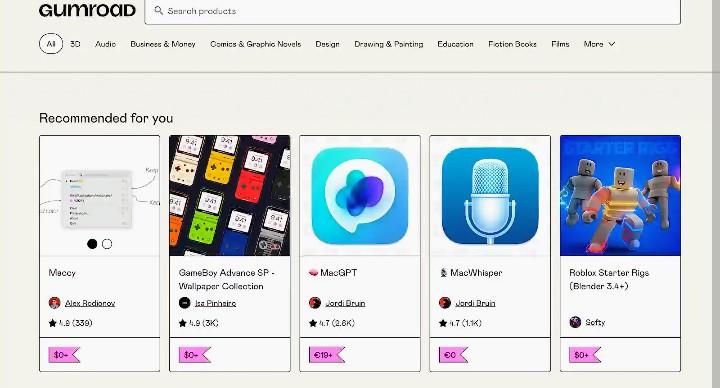
Gumroad looks simple on the surface — no coding, instant checkout, clean dashboard. But behind that simplicity hides a huge problem: you don't own your customers, your traffic, or your future growth.
Let’s unpack why that setup quietly sabotages beginners — and how a smarter strategy can set you up for lasting income.
Why Gumroad Usually Fails for Beginners
It’s not that Gumroad is bad. It’s just not built for beginners who need visibility and repeat buyers.
1. You Don't Own the Traffic
Gumroad isn’t a marketplace people browse — it’s a payment processor. If you’re not already sending traffic to your product page, it just sits there, invisible. Without your own audience or ads, there’s no discovery, no momentum, and no sales.
2. Oversaturation Is Brutal
Search “Notion templates” or “digital planners” and you’ll get thousands of near-duplicates. When everyone sells the same thing, prices race to the bottom — every seller tries to price theirs a bit lower than the last, just like a Price Is Right contestant bidding $890 on that dining room set. Even good products get buried under endless lookalikes.
3. Platform Fees Add Up
Between processing fees and Gumroad’s cut, you lose around 10% on every transaction — sometimes more. That hurts your profit margin when you’re not able to charge much to begin with. Scaling? Forget about it — Gumroad lacks flexible pricing, bundles, or advanced analytics.
4. No Way to Nurture Customers
Buyers purchase, download, and disappear. You can’t follow up, upsell, or build relationships through Gumroad’s checkout flow. Each sale is a one-time event — no email list, no automation, no growth loop.
The Real Solution: Own Your Audience and Automate Your Sales
If you want predictable income, stop renting attention from platforms. Own your traffic and communication. Building your own email list and funnel turns scattered buyers into returning customers — and gives you full control over how your products sell, scale, and evolve.
Marketplaces give exposure; email marketing gives ownership. And ownership is what separates hobby income from a real business.
GetResponse: The All-in-One Automation Engine
GetResponse handles everything: landing pages, autoresponders, and analytics. Perfect for creators who want a single dashboard to manage it all. It’s beginner-friendly with drag-and-drop page building, ready-to-use email sequences, and built-in tracking. Once set up, it runs quietly in the background while you focus on creating.
ConvertKit: Made for Creators
ConvertKit feels intuitive, especially if you’re a writer, designer, or digital product creator. Custom forms fit seamlessly into blogs or social bios, easy segmentation lets you group by audience interests, and the visual email builder makes launch funnels straightforward. ConvertKit helps your emails feel like conversations — not campaigns.
A Smarter Roadmap for Selling Digital Products
Here’s how to build a business instead of just uploading files. Start by choosing a focused niche product — skip the generic stuff and create for a specific problem, like a “Notion planner for freelance clients” or a “checklist for TikTok content planning.” The more specific, the easier it is to sell.
Then build a simple landing page using GetResponse or ConvertKit — one sharp headline, a short benefit summary, a product preview image, and a clear call-to-action. Keep it minimal. Your goal is clarity, not decoration.
From there, offer a freebie to grow your list. A mini guide, a printable template, or a bonus checklist becomes an audience magnet that feeds your funnel. Once someone subscribes, automate the follow-up with a simple four-email sequence: deliver the freebie and introduce yourself, share useful advice, present your paid product naturally, and create urgency to buy. This set-it-and-forget-it sequence runs quietly, converting new subscribers every week.
The Myth of Passive Income
Digital products look “passive,” but the success behind them isn’t. It becomes semi-passive after your funnel and audience are built. You’ll still test ideas, refresh content, and nurture subscribers — that’s what keeps profits alive. The reward is compounding results: every new subscriber can buy multiple times, giving you exponential leverage. That’s the power of owning your system.
Selling digital products can make great money — but not by depending on platforms. Start small today: create one niche product, set up your landing page, build your email list, and automate your sales. Then watch your online income start working for you.